

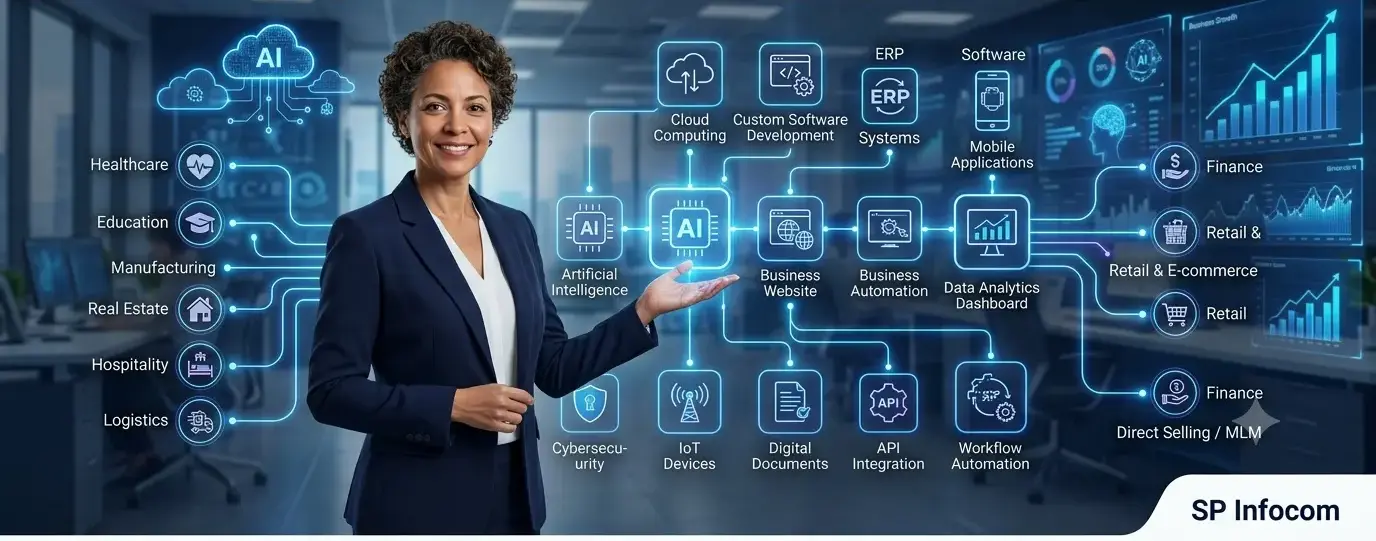
In today's competitive business landscape, digital transformation is no longer a strategy reserved for large enterprises. Small and medium-sized businesses (SMBs) are rapidly embracing digital technologies to improve efficiency, enhance customer experiences, and stay ahead of the competition. As markets become more dynamic and customer expectations continue to evolve, investing in the right technology has become essential for sustainable growth.
Digital transformation is not just about adopting new software or moving operations online. It is about reimagining how a business operates, serves its customers, and makes data-driven decisions. From custom software and mobile applications to cloud solutions, AI-powered automation, ERP, and CRM systems, digital transformation empowers businesses to work smarter and scale faster.
This comprehensive guide explains what digital transformation means, why it matters in 2026, the technologies driving business innovation, and how small and medium-sized businesses can successfully begin their digital transformation journey.
What is Digital Transformation?
Digital transformation is the process of integrating digital technologies into every aspect of a business to improve operations, increase productivity, and deliver better customer experiences.
Rather than relying on manual processes, spreadsheets, and disconnected tools, businesses adopt integrated digital solutions that automate workflows, centralize data, and improve collaboration across departments.
Digital transformation is a continuous journey that enables businesses to remain agile, competitive, and prepared for future technological advancements.
Why Digital Transformation Matters in 2026
Business operations have changed dramatically over the past few years. Customers expect faster services, employees need better collaboration tools, and organizations require real-time access to accurate business data.
Companies that continue to rely on outdated systems often experience slower growth, higher operational costs, and reduced customer satisfaction. Digital transformation enables businesses to adapt quickly to changing market conditions while improving overall performance.
- Improve operational efficiency
- Enhance customer experience
- Reduce manual work and human errors
- Increase productivity through automation
- Enable data-driven business decisions
- Support business growth and scalability
Common Challenges Faced by Small & Medium Businesses
Many SMBs understand the importance of digital transformation but struggle to identify where to begin. Common challenges include:
- Manual business processes
- Multiple disconnected software systems
- Lack of real-time business insights
- Inefficient customer management
- Limited IT resources
- Data security concerns
- Difficulty scaling existing systems
A well-planned digital transformation strategy helps businesses overcome these challenges while creating a strong foundation for future growth.
Key Technologies Driving Digital Transformation
Successful digital transformation involves adopting technologies that align with your business goals. Some of the most impactful technologies include:
1. Custom Software Development
Custom software is designed specifically for your business processes, helping eliminate inefficiencies and improve productivity. Unlike off-the-shelf software, it grows alongside your business and provides greater flexibility.
2. Cloud Computing
Cloud platforms provide secure access to business applications and data from anywhere. They reduce infrastructure costs while improving collaboration and business continuity.
3. Artificial Intelligence & Automation
Artificial Intelligence (AI) enables businesses to automate repetitive tasks, analyze customer behavior, improve decision-making, and deliver personalized customer experiences.
4. ERP & CRM Solutions
ERP systems streamline finance, inventory, HR, and operations, while CRM solutions help businesses manage customer relationships, sales pipelines, and marketing activities from a centralized platform.
5. Mobile Applications
Mobile applications have become essential for businesses looking to improve customer engagement and streamline internal operations. Whether it is an employee app, customer portal, or service platform, mobile applications help businesses stay connected with users anytime and anywhere.
6. Business Websites
A professional website is the foundation of every digital business. It acts as your online storefront, builds credibility, generates leads, and provides customers with information about your products and services 24/7.
7. Data Analytics & Business Intelligence
Modern businesses generate valuable data every day. Business Intelligence (BI) tools and analytics dashboards transform this data into meaningful insights, helping organizations make smarter decisions based on real-time information instead of assumptions.
8. Cybersecurity Solutions
As businesses become more digital, protecting sensitive information becomes increasingly important. Strong cybersecurity practices help safeguard customer data, financial records, and business operations from cyber threats.
Benefits of Digital Transformation
Digital transformation delivers measurable business value across every department. Some of the key benefits include:
- Increased operational efficiency
- Better customer experiences
- Faster decision-making through real-time data
- Improved employee productivity
- Lower operational costs
- Stronger data security
- Easier collaboration across teams
- Greater scalability for future growth
- Competitive advantage in the market
A Step-by-Step Digital Transformation Roadmap
Digital transformation is a journey rather than a one-time project. Businesses can follow these practical steps:
Step 1: Assess Current Business Processes
Identify inefficient workflows, manual tasks, and operational bottlenecks that slow down business growth.
Step 2: Define Clear Business Goals
Set measurable objectives such as improving customer satisfaction, reducing costs, increasing sales, or automating repetitive tasks.
Step 3: Select the Right Technologies
Choose technology solutions that align with your business goals, including custom software, ERP, CRM, mobile apps, cloud platforms, and automation tools.
Step 4: Implement in Phases
Rather than transforming everything at once, implement digital solutions gradually to reduce risk and ensure successful adoption.
Step 5: Train Employees
Technology is only effective when employees understand how to use it efficiently. Invest in proper training and continuous support.
Step 6: Measure Performance
Track key performance indicators (KPIs) such as productivity, customer satisfaction, operational costs, and revenue growth to measure the success of your digital transformation initiatives.
Common Mistakes to Avoid
- Starting without a clear digital strategy
- Choosing technology based only on cost
- Ignoring employee training
- Implementing too many systems at once
- Overlooking cybersecurity requirements
- Failing to integrate existing business systems
- Not measuring business outcomes
How to Choose the Right Digital Transformation Partner
Choosing the right technology partner plays a critical role in the success of your digital transformation journey.
Look for a software development company that understands your industry, offers customized solutions, follows secure development practices, provides ongoing support, and has experience delivering scalable digital solutions.
The Future of Digital Transformation
Technologies such as Artificial Intelligence (AI), Machine Learning, Cloud Computing, Internet of Things (IoT), Robotic Process Automation (RPA), and advanced analytics will continue to reshape how businesses operate over the coming years. Organizations that invest in digital transformation today will be better positioned to adapt to future innovations and changing customer expectations.
Final Thoughts
Digital transformation is no longer a competitive advantage—it has become a business necessity. Small and medium-sized businesses that embrace digital technologies can improve efficiency, strengthen customer relationships, reduce costs, and unlock new opportunities for growth.
Whether you are planning to develop custom software, launch a mobile application, modernize your website, implement an ERP or CRM system, or automate business processes, the right technology strategy can help your business achieve sustainable success.
At SP Infocom, we help businesses across healthcare, education, manufacturing, real estate, hospitality, logistics, fintech, e-commerce, and direct selling industries accelerate their digital transformation with innovative, secure, and scalable software solutions tailored to their unique business needs.
Custom software plays a vital role in digital transformation. Learn more in our detailed guide: Why Every Business Needs Custom Software in 2026 .